
To safely light water features and pools, including fountains, waterfalls, and ponds, landscape designers and architects must balance aesthetics, visibility, and long-term performance.
Without a thoughtful lighting design, even the most beautiful water feature can become difficult to navigate, create unwanted glare, or introduce unnecessary safety concerns.
A successful result enhances curb appeal, improves functionality, and extends the longevity of the entire outdoor environment.
Waterfalls, fountains, and pools naturally become the focal point for an outdoor living space, and effective lighting goes beyond simply adding fixtures.
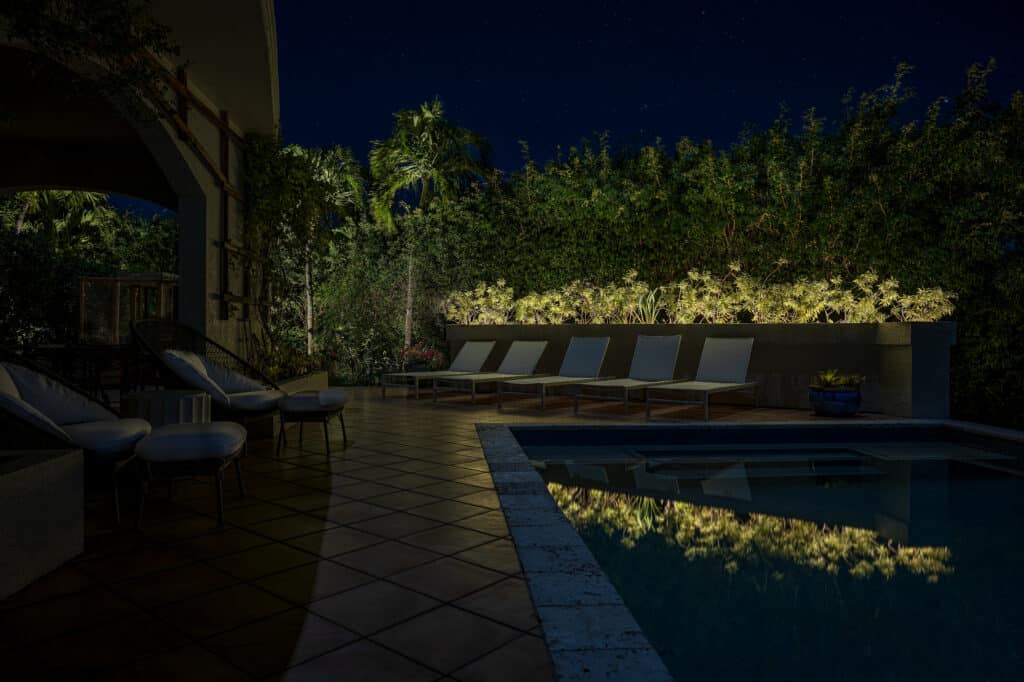
Why It Matters to Safely Light Water Features & Pools
For landscape designers and architects, safety is just as important as aesthetics when creating an outdoor space that their clients can enjoy for years to come.
Water features and pool lighting present unique environmental challenges, including excessive moisture, slippery surfaces, and risky electrical components.
A well-designed lighting plan:
- Improves visibility around pool edges, steps, walkways, and depths of water
- Reduces risks for potential hazards, slips, and falls
- Showcases the beauty of water’s movement and texture
- Enhances the longevity and reliability of the overall water feature and pool lighting system
- Prevents unwanted glare by positioning and aiming fixtures so the light works with the water rather than against it
Landscape designers and architects don’t have to sacrifice safety for aesthetics. With these best practices, you safely light water features and pools while creating an elegant, visually striking, durable, and reliable outdoor environment.
Low-voltage systems are the industry standard for most residential landscape lighting because they improve safety around water, reduce energy consumption, and simplify future maintenance or expansion.
Best Practices to Safely Light Water Features & Pools
Waterfalls, fountains, and pools naturally become the focal point for an outdoor living space, and effective lighting goes beyond simply adding fixtures. It creates depth, highlights the water’s movement, improves safety, and enhances the overall appearance after dark.
Let these 6 best practices guide your next water-lighting project:
Follow Electrical Regulations
To safely light water features and pools, it starts with proper installation. Use code-compliant wiring, fixtures, and transformers to guarantee your lighting designs are reliable in wet environments.
Coordinating with a licensed electrician during the planning process ensures that all requirements are met while reducing potential electrical hazards.
Select Light Fixtures for Wet Environments
Selecting fixtures designed specifically for wet environments prevents corrosion, electrical issues, and premature failure.
Examples include:
- Under-cap hardscape lights tuck under masonry and retaining walls or steps, delivering a gentle, soft ambience to an outdoor space.
- Step riser lights illuminate stairs leading to pools and patios, improving both safety and visual appeal.
- Railing and fence lights provide subtle illumination around decks, pools, and property boundaries while improving visibility and enhancing nearby landscape elements.
- Recessed lights are cored into walking surfaces, keeping a clean, low-profile look. They are frost-, heat-, and moisture-resistant, making them ideal for hardscape and deck installations where durability and a clean appearance are priorities.
Use Low-Voltage Lighting Systems
Low-voltage systems are the industry standard for most residential landscape lighting because they improve safety around water, reduce energy consumption, and simplify future maintenance or expansion.
Plan for Maintenance and Accessibility
Great lighting design involves long-term maintenance from the beginning.
Planning access points for servicing allows technicians to maintain fixtures, transformers, and wiring without disrupting the surrounding landscaping or hardscapes.
Choose the Right Color Temperature and Light Quality
The correct color and temperature make a huge difference in how a pool or water feature is experienced after dark.
Warm white lighting (typically 2700K-3000K) creates an inviting and relaxing atmosphere, and high-quality optics provide a glare-free glow and highlight the movement of water, natural textures, and surrounding architectural components.
Partner With an Outdoor Lighting Professional
Collaborating with an experienced outdoor lighting team early in the design process helps integrate lighting seamlessly with the landscape design while balancing performance, safety, and aesthetics.
To safely light water features and pools requires precision and intention. The right partner delivers a more cohesive result.
At Carolina Outdoor Lighting, we work with landscape designers and architects to create captivating nighttime experiences. Talk with our team today and learn how we can support your next project.